Badavi Linga (monolithic Shiva linga)
Hampi · India
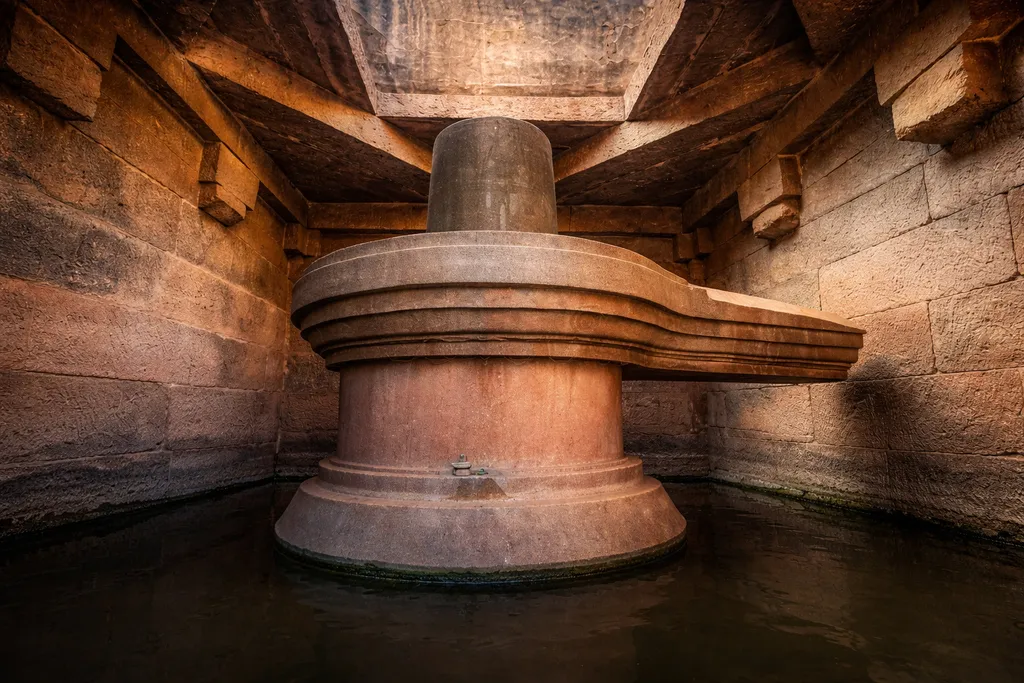
A roofless shrine in Hampi shelters a ~3 m monolithic Shiva linga standing in water—an icon of devotion, engineering, and modern mythmaking.
Part of
Claims about Badavi Linga (monolithic Shiva linga)
- A ~3 m monolithic Shiva linga is the shrine’s focal object
- The small shrine is roofless/partly ruined and the linga sits in standing water
- The ‘always wet’ effect is plausibly explained by engineered water channels
- The shrine is adjacent to the Ugra Narasimha monument in Hampi’s sacred core
- The shrine sits within the broader UNESCO ‘Group of Monuments at Hampi’ landscape
- Popular accounts emphasize a ‘Shivlinga that never dries’
- Alternative hypothesis: the linga predates Vijayanagara (disputed)
- ‘Largest’ claims depend on definitions and are often unsupported by comparative inventories
- Provenance/dating is under-documented in public sources; strong documentation would be scans, inscriptions, and ASI reports
Evidence
- Commons photo page: shrine condition, roofless chamber, water canal note, and coordinates
- Coordinates cross-check: Commons object location + Wikidata coordinate location
- Cambridge repository record: thesis on Vijayanagara irrigation and water supply systems
- UNESCO WHC property page: Hampi’s significance, scale, and decline narrative
- Symbolic interpretation: Ganga descent narrative as meaning-layer
- Sinopoli & Morrison (1991) PDF: VMS survey reporting (1988–1989 seasons)
- Morrison & Sinopoli (2006) chapter PDF: archaeological survey in Vijayanagara region
- Evidence gap: few easily accessible peer-reviewed, site-specific studies focused solely on Badavi Linga
- Comparative caution: Commons description gives dimensions/setting but not ‘world’s largest’ claims
- Scholarly background: Michell’s synthesis on Vijayanagara and successor-state art/architecture
- WHITRAP profile: heritage framing and management perspective