Betä Giyorgis (Church of St. George)
Lalibela Rock-Hewn Churches · Ethiopia
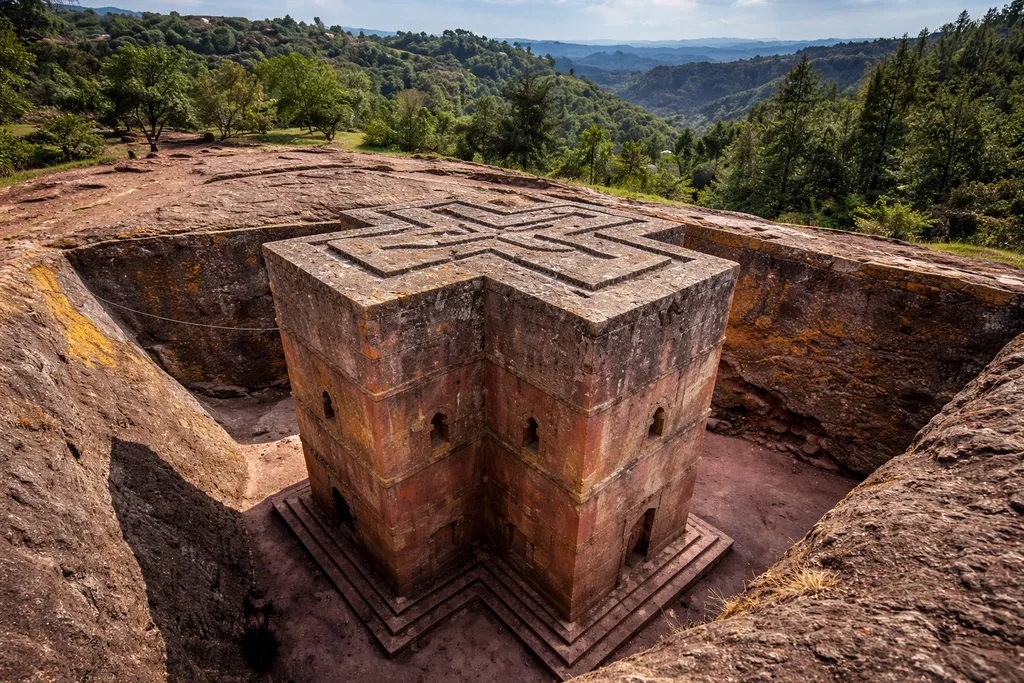
A free-standing, rock-hewn cruciform church at Lalibela, separated from bedrock by a deep trench and central to Ethiopia’s living Orthodox pilgrimage tradition.
Part of
Claims about Betä Giyorgis (Church of St. George)
- ‘Last-built’ is a common tradition, but evidence is uneven
- ‘Built by angels overnight’ is legend, not an evidentiary claim
- Mainstream dating places major construction in the late 12th–early 13th century
- Trenches and passages are part engineering, part ritual landscape
- A cross-shaped monolithic church carved from rock
- Some research argues Lalibela was not created ‘all at once’
- The complex is often interpreted as a symbolic ‘New Jerusalem’
- Pointed (‘ogival’) windows invite debate about architectural influences
- Knights Templar / European-builder claims lack support in core heritage sources
- Part of the UNESCO-listed Rock-Hewn Churches of Lalibela
Evidence
- Wikipedia coordinate listing for Betä Giyorgis
- Pointed-arch (‘ogival’) window remark in ICOMOS evaluation
- OpenStreetMap coordinates for Betä Giyorgis