Pyramids of Caral (Sacred City of Caral-Supe)
Supe, Lima, Peru
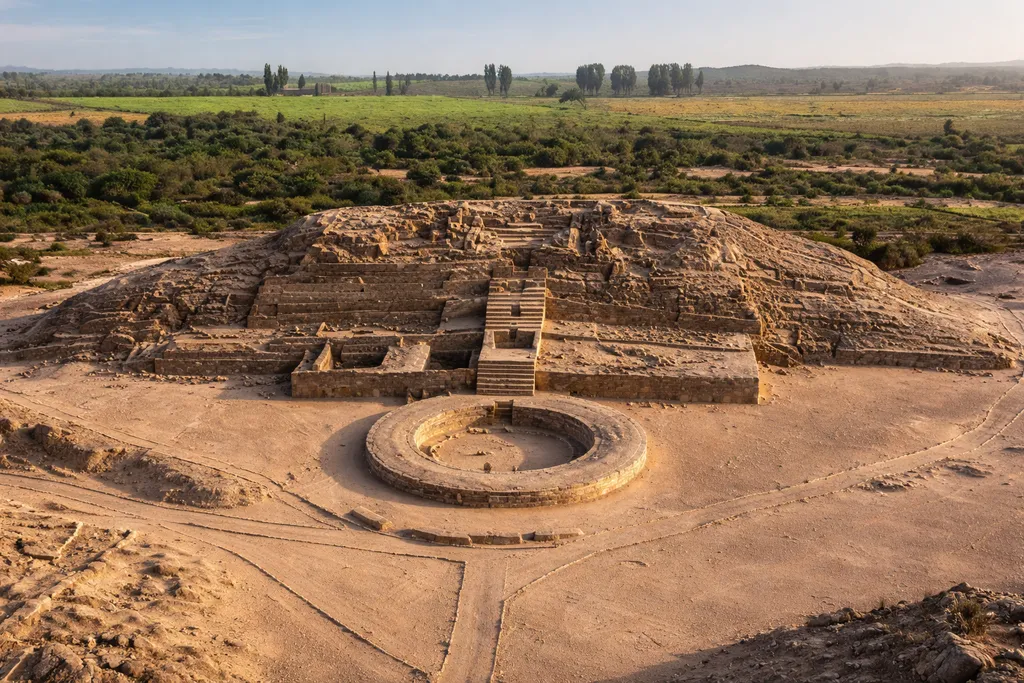
Monumental Late Archaic (preceramic) urban-ceremonial center in Peru’s Supe Valley, famous for large platform mounds (“pyramids”) and sunken circular plazas—among the earliest large-scale urbanism in the Americas.
Claims about Pyramids of Caral (Sacred City of Caral-Supe)
- Economy combined irrigated agriculture with coastal resources via exchange
- Sunken circular plazas and mound-plaza planning anticipate later Andean traditions
- Credit and narrative disputes shaped how Caral entered global media
- Possible early knotted-string record-keeping is disputed
- Modern threats (land trafficking, squatters) add uncertainty to preservation and research
- ‘Maritime Foundations’ remains a live debate: fish vs farming is an oversimplification
- Monumental urban-ceremonial center in the Late Archaic (preceramic) Andes
- ‘Oldest city in the Americas’ depends on definitions and comparisons
- ‘Peaceful Caral’ is an interpretation, not a settled fact
- Radiocarbon dating anchors Caral’s main sequence in the 3rd millennium BCE
- Fringe claims of transoceanic/alien influence lack credible archaeological support
Evidence
- Architecture: major platform mound dimensions (Science 2001)
- Agriculture and irrigated production (Science 2001)
- UNESCO/ICOMOS advisory evaluation (PDF) for World Heritage nomination
- Cultural period label: Late Archaic / Cotton Preceramic (Science 2001)
- Marine resources and inland-coastal exchange (Science 2001)
- Site scale: ~65 hectares and multiple monuments (Science 2001)
- Sunken circular plazas as a recurring architectural form (Science 2001)
- UNESCO World Heritage listing entry (Sacred City of Caral-Supe)
- Discover Magazine: research-credit and narrative dispute coverage
- Regional chronology: Norte Chico radiocarbon framework (Nature 2004)