Dolmen de Menga (Cueva de Menga)
Antequera, Andalusia, Spain
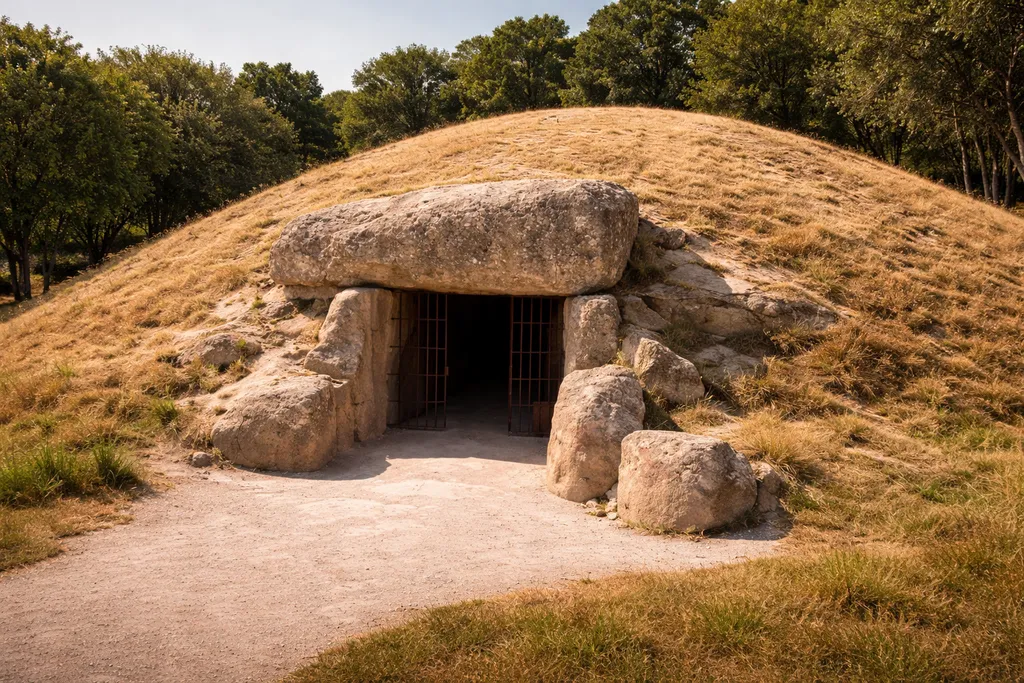
A monumental Neolithic corridor dolmen in Antequera, famous for its colossal stones, internal well, and landscape-oriented alignment within the UNESCO-listed Antequera Dolmens Site.
Claims about Dolmen de Menga (Cueva de Menga)
- Mainstream chronology places Menga’s construction in the Late Neolithic (broad 4th millennium BCE)
- Dolmen de Menga is a core component of the UNESCO-listed Antequera Dolmens Site
- Landscape context includes nearby features (e.g., Matacabras shelter) that may matter for interpretation
- Menga’s axis is widely reported to orient toward Peña de los Enamorados (a prominent landmark)
- Alternative hypothesis: Menga functioned as a territorial/ritual landmark, not only a burial monument
- The internal well/shaft is a documented ‘oddity’ whose function is unresolved
Evidence
- Mainstream dating places Menga’s construction in the 4th millennium BCE (broad range)
- OpenStreetMap node coordinates for Dolmen de Menga
- UNESCO component map coordinates for Menga/Viera sector (1501-001)
- UNESCO OUV framing emphasizes monument–landscape relationships
- Competing hypotheses for the well: practical water access vs ritual/symbolic meanings