Goseck Circle (Goseck Henge)
Goseck, Saxony-Anhalt, Germany
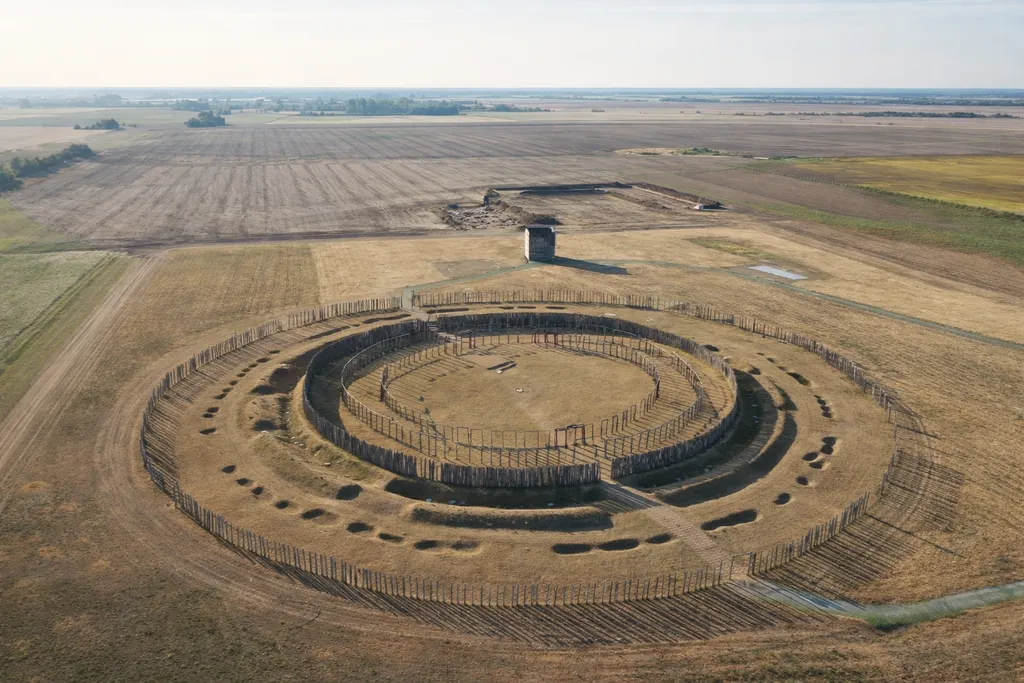
An early Neolithic circular ditched enclosure with timber palisades and three gates, famous for proposed solstice alignments.
Claims about Goseck Circle (Goseck Henge)
- Debate: does Goseck imply a long ‘astronomy tradition’ into the Bronze Age?
- Dated to the early 5th millennium BCE (Middle Neolithic)
- From aerial discovery to excavation and reconstruction (1991–2005)
- Likely multi-purpose: ritual, social space, and timekeeping
- “Oldest solar observatory” is a label, not a settled conclusion
- Alternative hypothesis: northern gate targeted a pole star
- Reconstruction adds an interpretation layer (useful, but not neutral)
- A rondel with ditch, palisades, and three gates
- Southern gates align with winter-solstice sunrise and sunset
Evidence
- Coordinates from OpenStreetMap node data
- Academic synthesis linking rondels to ‘measuring time’ debate
- Coordinates and basic description (reference compilation)
- Measured plan: ~72 m outer ring, ~46 m inner ring
- 2002–2004 excavation campaigns
- Recent research communication: ‘sacred place and observatory’ framing
- Licensed photo documentation of the reconstructed enclosure
- Museum bibliography for deeper primary literature
- Gate corridors and solstice axis described in archaeology/astronomy abstracts