Great Sphinx of Giza
Memphis Necropolis › Giza Plateau · Egypt
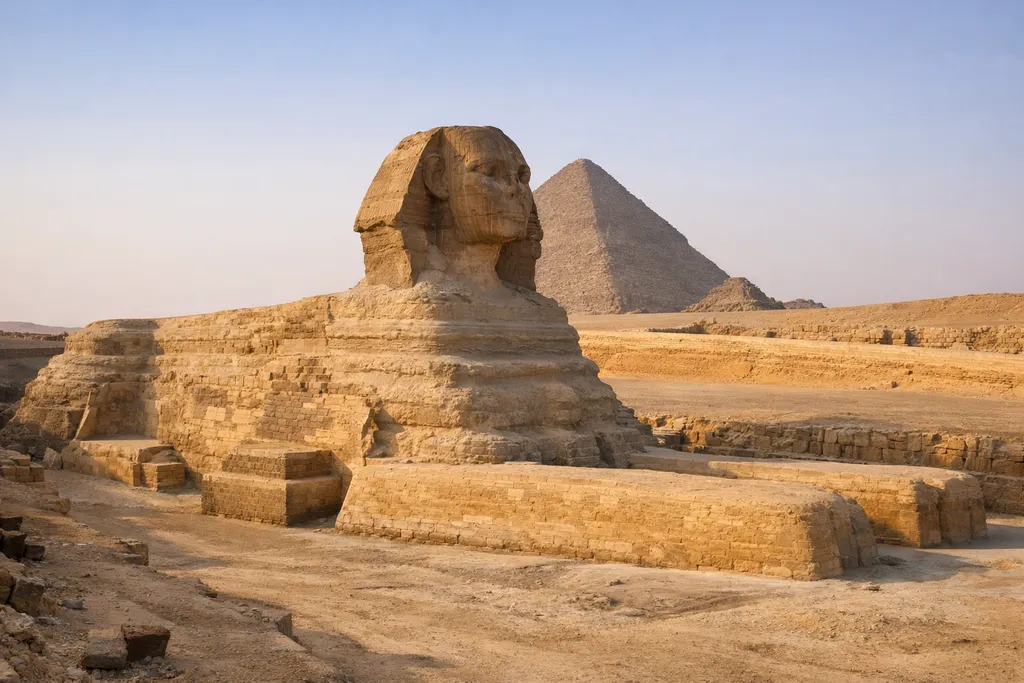
A monumental limestone sphinx carved from bedrock on the Giza Plateau, associated with the Old Kingdom pyramid landscape and later New Kingdom veneration.
Part of
Claims about Great Sphinx of Giza
- Alternative attributions (Khufu/Djedefre) exist but remain contested
- Architectural links tie the Sphinx enclosure to nearby temples
- Mainstream attribution to Khafre’s 4th Dynasty building program
- New Kingdom attention (Dream Stela) shows a later cult and re-interpretation
- Skeptical claim: popular stories about the Sphinx’s missing nose are often wrong
- Modern restorations changed the monument and shaped how we interpret damage
- The Sphinx functioned as an east-facing ritual focus tied to solar ideas
- Alternative hypothesis: rainfall-weathering implies a much older Sphinx (disputed)
Evidence
- AERA: Khafre’s monuments and spatial context at Giza
- AERA: “Who built the Sphinx and why?” (synthesis + debate map)
- Dream Stela: Thutmose IV associates the Sphinx with Hor-em-akhet
- Alternative attribution: Khufu proposed from iconography/layout (contested)
- Repeated sand burial and clearing episodes (historical/conservation record)
- Smarthistory analysis (art history + context)
- Water-erosion hypothesis summarized (contested)
- Coordinate location statement (Wikidata)