Mahishasuramardini Cave Temple (Mahishasuramardini Mandapa)
Mahabalipuram · India
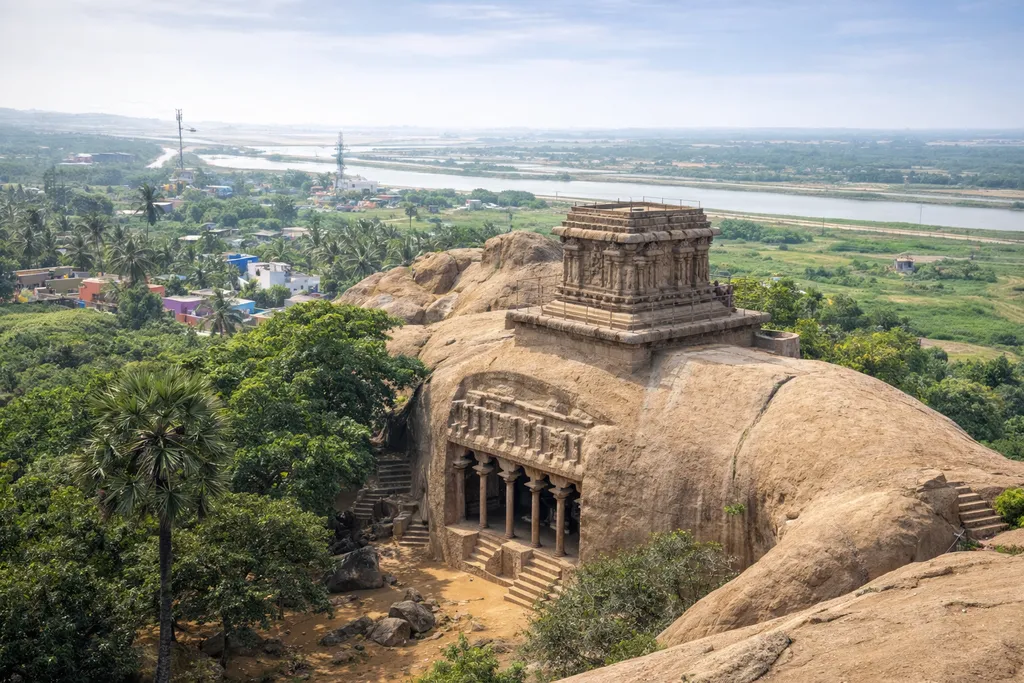
A Pallava-period rock-cut cave/mandapa at Mamallapuram (Mahabalipuram), Tamil Nadu, noted for its large reliefs of Durga as Mahishasuramardini and a reclining Vishnu (Anantasayana) scene.
Part of
Claims about Mahishasuramardini Cave Temple (Mahishasuramardini Mandapa)
- Mahishasuramardini Cave Temple is a Pallava rock-cut mandapa at Mamallapuram (Mahabalipuram).
- The cave temple lies within the UNESCO World Heritage 'Group of Monuments at Mahabalipuram'.
- A principal relief shows Durga as Mahishasuramardini battling the buffalo demon Mahishasura.
- A principal relief shows Vishnu reclining on Ananta (Anantasayana).
- The mandapa has a pillared front and a multi-chamber interior typical of Pallava rock-cut caves.
- The site is commonly dated to the 7th century (Pallava era), but precise dating is not always stated for this specific mandapa.
- The mandapa is often used as evidence of Pallava experimentation in rock-cut temple architecture.
- The mandapa belongs to a monument complex noted for broad artistic influence across South and Southeast Asia.
- The monument is under formal heritage protection and conservation management via ASI within the World Heritage property.
- Modern labels such as 'dedicated to Durga' may oversimplify a multi-deity sculptural program.
Evidence
- ASI overview lists the Mahishasuramardini (Mahishmardhini) cave among key monuments at Mahabalipuram
- Government tourism description identifies the site and summarizes its major reliefs
- AIIS photo record documents the Mahishasuramardini (Durga) relief panel in the cave
- Smarthistory analysis explains the Durga slaying Mahisha relief as Pallava art
- Ministry of Culture portal summarizes the UNESCO property and its significance
- Incredible India describes a reclining Vishnu (Anantasayana) scene in the cave
- Institutional sources frame Mahabalipuram monuments as primarily 7th–8th century Pallava works