The Pyramids of Meroë
Shendi, River Nile State, Sudan
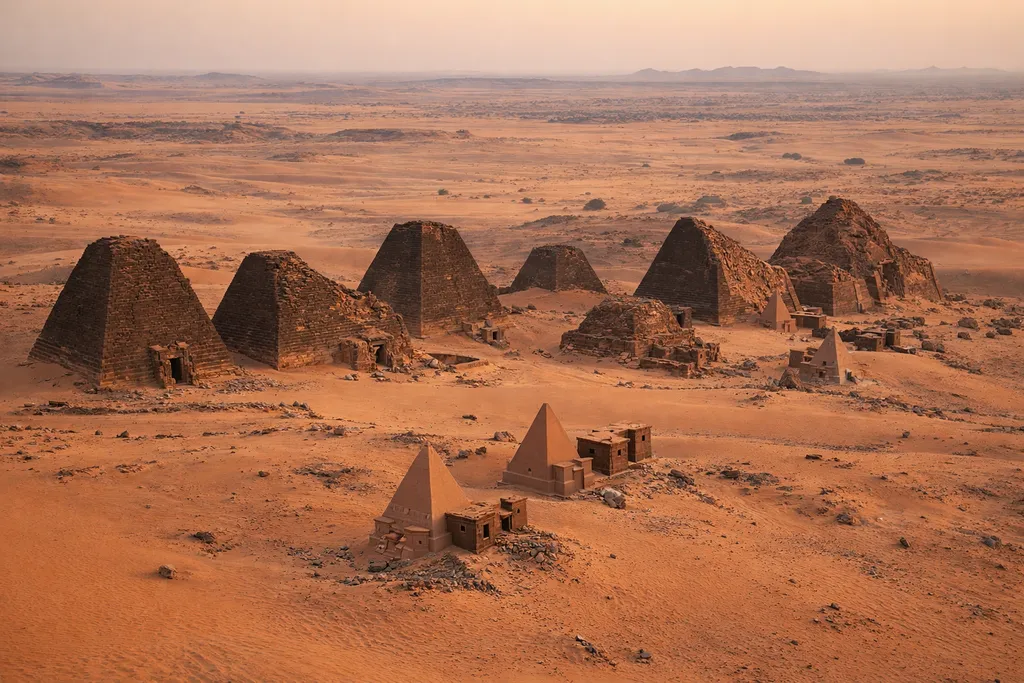
A cluster of Kushite (Meroitic) royal and elite pyramid tombs at Meroë (Begrawiya) in River Nile State, Sudan—principally the North, South, and West cemeteries—forming the cemetery component (Meroe 2) of the UNESCO World Heritage property 'Archaeological Sites of the Island of Meroe' (1336).
Claims about The Pyramids of Meroë
- The nomination dossier provides a component-level coordinate for Meroe 2 (North and South cemeteries).
- The Southern Cemetery contains more than 200 graves and includes early phases; initial Meroë royal burials in the 3rd century BCE were placed here before shifting north.
- Kushite pyramids at Meroë are described as smaller and steeper than Old Kingdom Egyptian pyramids (bases c. 4.5–17.5 m; angles 60°–73°).
- Conservation and visitor infrastructure issues are explicitly noted in the nomination dossier (sandstone fragility, need for conservation, limited interpretation on-site).
- UNESCO decision records inscription on the World Heritage List under criteria (ii), (iii), (iv), and (v).
Evidence
- Nomination Executive Summary lists geographic coordinates for Meroe 2 (North and South cemeteries)
- Nomination dossier describes Southern Cemetery scale (>200 graves) and early burial types
- Nomination dossier describes pyramid base-size range and steep angles (60°–73°)
- Nomination dossier highlights sandstone vulnerability, need for major conservation, and gaps in visitor interpretation
- World Heritage Committee Decision 35 COM 8B.22 records inscription and criteria