Rani-ki-Vav (Queen’s Stepwell), Patan
Patan, Gujarat, India
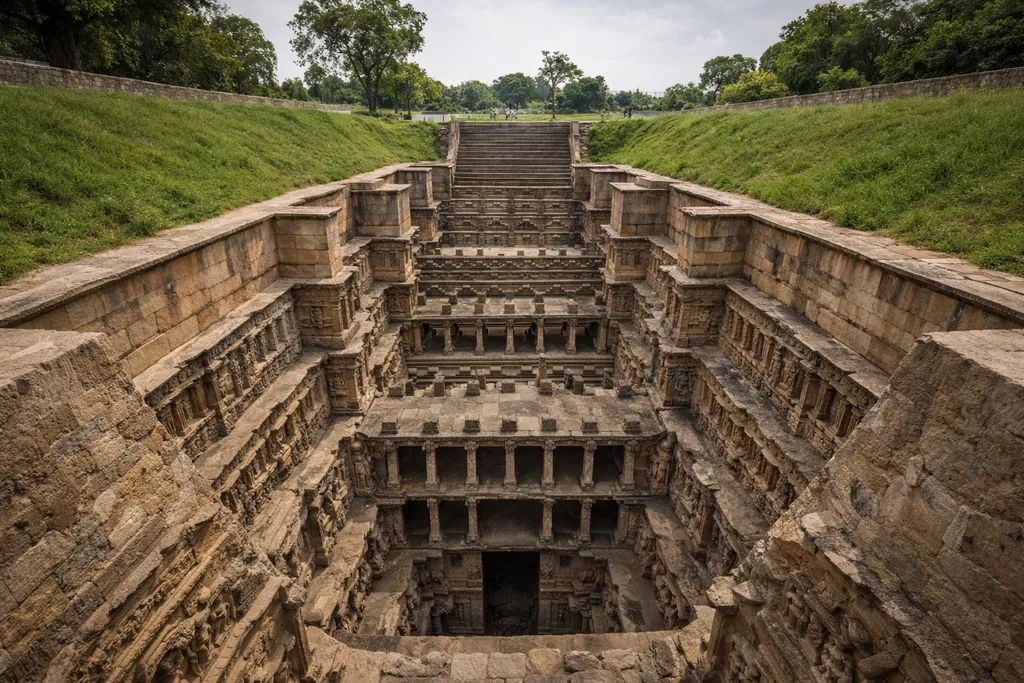
A richly carved 11th‑century stepwell in Patan, Gujarat (India), associated with the Chaulukya/Solanki period and inscribed as a UNESCO World Heritage Site in 2014.
Claims about Rani-ki-Vav (Queen’s Stepwell), Patan
- Rani-ki-Vav is an 11th-century stepwell (vav) in Patan, Gujarat, India
- The stepwell is commonly attributed to Queen Udayamati as a memorial to King Bhima I (Chaulukya/Solanki)
- The monument is a long, axial, multi-level subterranean structure culminating in a well shaft
- The stepwell’s sculptural program heavily features Hindu deities, with a strong emphasis on Vishnu-related themes
- Many accounts report that the stepwell became silted/buried and was later excavated and conserved in the modern period
- The site’s publicly reported coordinates cluster around 23.858°N, 72.101°E (minor source-to-source variation)
- Sculpture counts (e.g., '500 principal' figures) should be treated as documented estimates rather than exact inventories
Evidence
- UNESCO and Government of India sources publish near-identical coordinates for the monument
- The UNESCO nomination file documents the architectural sequence and components of the stepwell
- ASI guidebook reports key measurements and the multi-level descent
- ASI guidebook provides widely repeated estimates for sculpture totals and thematic emphasis
- Multiple sources repeat the patronage narrative linking Queen Udayamati and King Bhima I