Vettuvan Koil (Vettuvankoil), Kalugumalai
Kalugumalai, Tamil Nadu, India
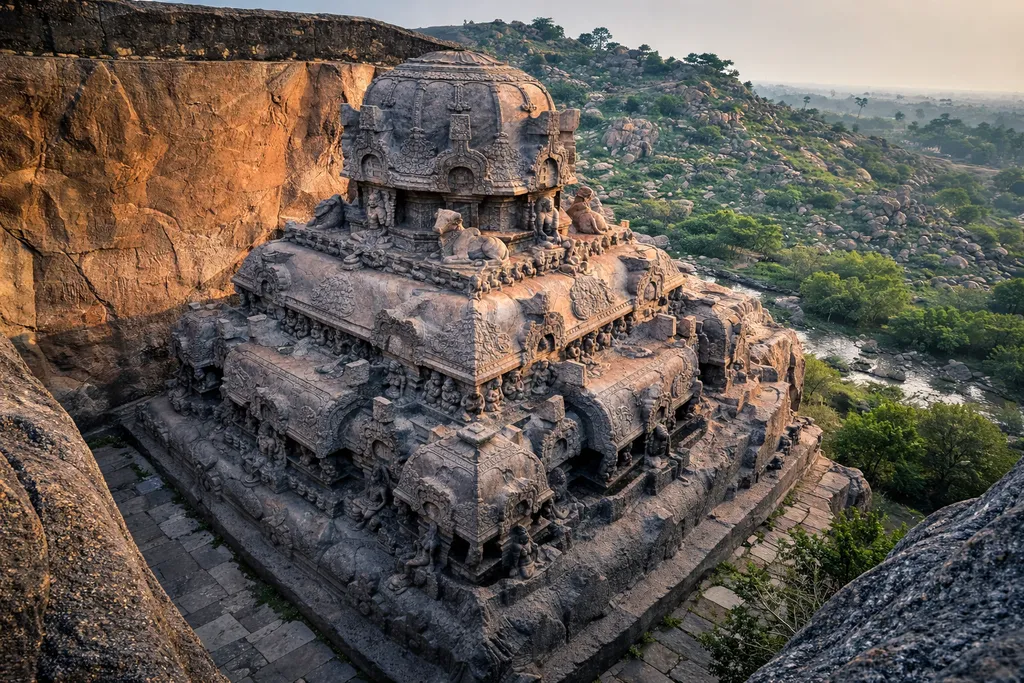
An unfinished Early Pandya-era monolithic rock-cut shrine excavated into the Kazhugumalai hill complex near Kalugumalai, Tamil Nadu, India.
Claims about Vettuvan Koil (Vettuvankoil), Kalugumalai
- Vettuvan Koil is an unfinished monolithic rock-cut shrine at Kalugumalai (Kazhugumalai), Tamil Nadu
- Most sources date the shrine to the Early Pandya period, commonly around the 8th century CE
- The monument was excavated top-down from a single rock mass, leaving the lower carving incomplete
- Vettuvan Koil is generally described as a Shaiva shrine, though no original lingam is present today
- The surviving superstructure shows Dravidian vimana-like architecture with sculpted panels and niches
- The monument is under heritage protection/administration by Tamil Nadu’s archaeology authorities
- Vettuvan Koil sits within a multi-faith hill complex that includes major Jain relief carvings and beds
- Inscriptional evidence at Kazhugumalai is frequently used to argue for early medieval patronage and craft networks
- Attribution to the Pandya ruler Parantaka Nedunjadaiyan is common but not uniformly presented
- Comparisons to Ellora and Mahabalipuram are interpretive analogies, not evidence of direct connection
- Folklore about abandonment or curses circulates, but it is not securely grounded in primary evidence
Evidence
- Curated Google Arts & Culture story describes top-down excavation and unfinished state
- Sahapedia notes the shrine’s unfinished Shaiva framing and later Ganesha presence
- New Indian Express feature provides descriptive architectural details and common dating narrative
- Curated sources emphasize Kazhugumalai’s multi-faith landscape (Jain reliefs + Shaiva shrine + Murugan temple nearby)