Yaxhá
Petén, Guatemala
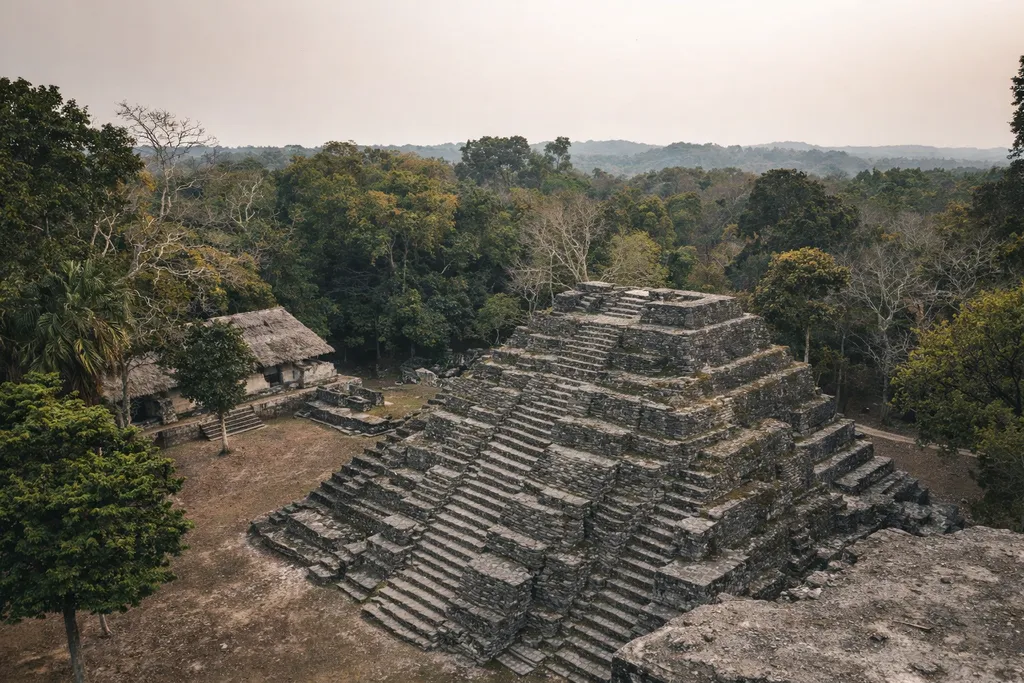
Yaxhá is a major Maya archaeological site in northeastern Petén, Guatemala, within the protected area known as Parque Nacional Yaxhá–Nakum–Naranjo. Research and conservation work led by Guatemala’s IDAEH has documented long-term occupation and major civic-ceremonial architecture, including acropolis groups, plazas, causeways linking the epicenter to the lakeshore, and a sculpted-monument (stela) tradition whose earliest examples date to the beginning of the Classic era.
Claims about Yaxhá
- IDAEH began a research and conservation project in 1990 at Yaxhá and Topoxte; early excavations targeted Temple 216, the Lake Causeway, and Vía 5.
- The synthesis reports a Preclassic chultun near a ballcourt platform corner and notes evidence of a drainage canal under the ballcourt patio.
- Stela erection at Yaxhá begins toward the beginning of the Classic era; Stelae 1 and 2 are reported to mention Yaxhá’s toponymic glyph.
- Terminal Classic activity is described as major renovation and relocation of sculpted monuments, including movement of several stelae to new placements associated with later architectural activity.
Evidence
- IDAEH-linked synthesis: research and conservation began in 1990 at Yaxhá and Topoxte; early excavations targeted Temple 216, Lake Causeway, and Vía 5
- Ballcourt-associated evidence: Preclassic chultun near platform corner and drainage canal under ballcourt patio
- Classic-era stelae: synthesis states first stelae erected near beginning of Classic; Stelae 1 and 2 mention Yaxhá toponymic glyph
- Terminal Classic monument movement: synthesis lists examples of relocated stelae and notes Lake Causeway control-point removal to encourage flow
- Wikidata coordinate anchor for Yaxhá (17°4'20"N, 89°24'0"W) used as site mapping point